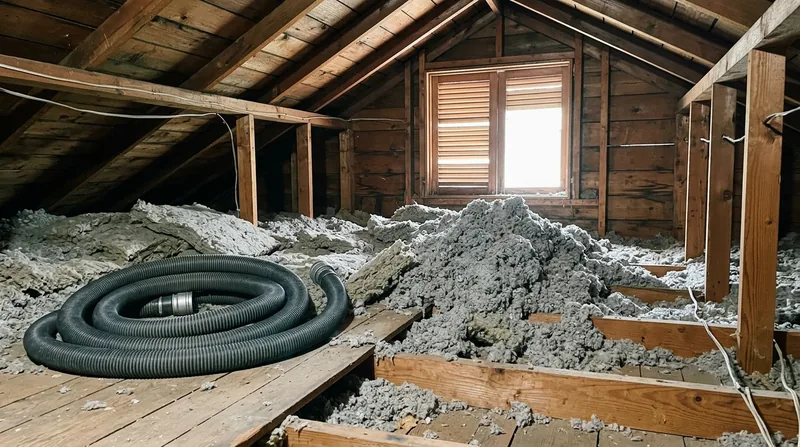




Minneapolis attics tell a story written in decades of settled insulation. The early twentieth-century bungalows of Northeast, the mid-century ramblers of Richfield and Edina, and the newer construction spreading across Washington and Anoka counties all share the same problem: old fiberglass, cellulose, or mineral wool insulation that has compressed flat under its own weight, lost its R-value, and stopped doing its job. Insulation removal in Minneapolis is the necessary first step before any retrofit. We pull out the failed material, vacuum the attic floor clean, seal air leaks, and prepare the space for new spray foam or blown-in insulation before the heating season begins. Long, cold winters in climate zone 6A mean ice dams along the eaves every year, and those dams trace directly back to heat escaping through a flattened attic floor. The same vapor-drive physics that causes condensation at rim joists in December makes settled insulation a liability, not an asset. Removing it correctly, disposing of it responsibly, and installing new insulation with proper air sealing is the difference between a heating bill that stays flat and one that climbs every winter.
Why Insulation Removal Matters in Minneapolis Homes
Settled insulation loses R-value over time. Fiberglass batts compress under their own weight, blown-in cellulose migrates and clumps, and mineral wool becomes a thin mat that insulates almost nothing. In Minneapolis, where winter heating loads are heavy and attic heat loss directly causes ice damming along the eaves, this failure is not cosmetic. The attic floor that was once R-38 or R-49 is now R-12 or R-20, and your heating system runs harder to compensate. Removal clears the way for new insulation installed to code, with proper thickness and density, and with air sealing that stops infiltration at the rim joist, top plates, and penetrations where cold air leaks in.
- We remove all old insulation material, including batts, blown-in fiberglass, cellulose, and mineral wool.
- We vacuum the attic floor and rim area to clear debris, dust, and settled material.
- We identify and seal air leaks at rim joists, top plates, and penetrations before new insulation is installed.
- We dispose of removed insulation responsibly and in compliance with local waste regulations.
- We prepare the attic for new spray foam, blown-in insulation, or a combination of both.
Proper removal is the foundation of any insulation retrofit in Minneapolis.
Local example: A 1950s rambler in Richfield with R-20 fiberglass batts compressed to half their original thickness loses 30 to 40 percent of its R-value. Removal and replacement with closed-cell spray foam at R-36 to R-48 stops ice dams, eliminates rim joist condensation, and cuts heating costs by 15 to 25 percent over the following winter. The removal step is not optional.
For more on what comes after removal, see our attic spray foam insulation service or our insulation replacement and re-insulation page. Minneapolis building code and energy code requirements for attic insulation, air sealing, and ventilation are set by your local building department; we help you navigate what applies at your address.
How We Remove Insulation and Prepare Your Attic
The removal process is straightforward but requires care. We bring in industrial vacuum equipment, remove all old insulation in sections, and dispose of it properly. The attic floor is then cleaned down to bare substrate, air leaks are identified and marked, and the space is ready for new insulation. This process takes a full day for a typical single-story home, longer for larger or multi-level properties. We work during daylight hours, minimize disruption to your living space, and make sure the attic is safe and clean before we leave.
- We inspect the attic floor, rim joists, and roof deck to assess the volume and condition of material to be removed.
- We set up containment and mechanical ventilation to control dust during the removal process.
- We remove old insulation in sections and load it into disposal bins or trucks.
- We vacuum the attic floor, rim area, and any exposed framing to clear dust and debris.
- We identify air leaks at rim joists, top plates, electrical penetrations, and plumbing vents.
- We seal or mark those leaks for spray foam application or other air sealing before new insulation is installed.
A clean attic floor is the prerequisite for new insulation that performs to code.
Minneapolis example: A Northeast bungalow with 1,200 square feet of attic space and settled R-20 fiberglass takes one full day to remove and prep. We haul away approximately 8 to 12 cubic yards of old material. The attic floor is then clean, air leaks are sealed, and the space is ready for new spray foam or blown-in insulation before winter heating season begins.
Learn more about closed-cell spray foam and how it seals air while insulating, or explore air sealing services that work alongside removal and replacement.
Insulation Removal Methods: What Works Best
| Method | Description | Best for |
|---|---|---|
| Vacuum extraction with containment | Industrial-grade vacuum equipment removes insulation in sections; dust is contained and filtered to prevent indoor air contamination. | Standard attic removal; homes with occupied living spaces below; any fiberglass, cellulose, or mineral wool material. |
| Batt removal by hand and vacuum cleanup | Fiberglass or mineral wool batts are removed manually and disposed of; vacuum system cleans the floor and rim area afterward. | Smaller attics; accessible spaces with light insulation load; when contamination risk is minimal. |
| Blown-in material removal and disposal | Loose-fill cellulose or fiberglass is vacuumed from the attic floor; material is bagged and disposed of according to local regulations. | Attics with settled or compacted blown-in insulation; homes where new spray foam or blown-in replacement is planned. |
| Air sealing and debris cleanup after removal | After old insulation is removed, air leaks at rim joists, top plates, and penetrations are sealed with foam or caulk; attic is cleaned and ready for new insulation. | All removal projects; ensures new insulation performs to code and stops ice dams and condensation issues. |
Each removal method is chosen based on the volume of material, the attic layout, and what new insulation will follow. We assess the job on site and recommend the approach that is fastest, cleanest, and most cost-effective for your home.
Insulation Removal Cost in Minneapolis: What to Expect
The cost of insulation removal in Minneapolis depends on the size of the attic, the type and volume of material to be removed, the condition of the space, and the complexity of air sealing and debris cleanup. A typical single-story home with 1,000 to 1,500 square feet of attic space and settled fiberglass or cellulose runs from $950 to $2,500. Larger homes, multi-level properties, or attics with difficult access may cost more. The removal cost is often offset by the energy savings that follow once new insulation is installed, especially in Minneapolis where heating loads are high and ice damming is a recurring winter problem.
Several factors move the price up or down. Attic size is the primary driver. Access matters: if the attic is cramped, has low headroom, or requires temporary ducting or equipment relocation, labor increases. The type of old insulation affects disposal costs; some materials require special handling. Air sealing scope also factors in: if rim joists are extensive or top plates have many penetrations, sealing time increases. Getting two or three written estimates before you book is the smart move; each contractor will assess the job differently, and a range of quotes helps you understand what is fair in your market.
For detailed pricing on removal as part of a full insulation retrofit, visit our pricing page. To schedule a free on-site estimate with no obligation, call us at (612) 441-5734 or request an estimate online.
Insulation Removal Near Me: What Minneapolis Homeowners Should Know When Hiring
When you are ready to hire a spray foam or insulation contractor for removal and replacement work, verify that the company is fully insured and can provide proof of coverage. Ask for references from recent jobs in your neighborhood; a contractor who has worked in Richfield, Edina, or Northeast Minneapolis can speak to local conditions, code requirements, and what works in homes like yours. Request a written estimate that includes the scope of removal, the disposal plan, any air sealing work, and the cost. Do not accept an estimate with no R-value, no thickness specification, or a price that seems far below market; that is often a sign of corner-cutting or incomplete work. If your home is in a historic district or subject to HOA rules, confirm that exterior work (if any) complies with local requirements before work begins.
Ask about the removal timeline and whether the contractor will clean and prepare the attic before leaving. Understand what happens to old insulation; responsible contractors dispose of material according to local waste regulations. If the attic has vermiculite (a loose, granular insulation used in older homes), do not disturb or remove it yourself; vermiculite may contain asbestos and requires testing by a licensed professional. A good contractor will identify it, flag it, and recommend professional testing or encapsulation rather than removal.
For a free estimate and to discuss your removal and insulation needs, contact us online or call (612) 441-5734. We are fully insured, we provide written estimates with R-value and thickness specifications, and we have been serving Minneapolis and the surrounding area since 2010.
Insulation Removal in Minneapolis: Pricing Guide
| Service | Price | Details |
|---|---|---|
| Small attic removal and prep | Starting at $950 | Up to 1,000 sq ft, settled fiberglass or cellulose, basic air sealing at rim and top plates |
| Standard single-story home removal | Starting at $1,400 | 1,000 to 1,500 sq ft attic, full vacuum extraction, debris cleanup, comprehensive air leak identification |
| Large or multi-level home removal | Starting at $2,000 | 1,500+ sq ft, multiple attic zones, complex rim joist geometry, difficult access requiring extended labor |
| Removal with full air sealing package | Starting at $2,500 | Complete removal, rim joist and top plate sealing with spray foam, attic floor prep ready for new insulation |
| Travel and estimate | Included and free | No separate call-out fee in Minneapolis and surrounding areas; written estimate provided within 24 hours |
Indicative pricing, the exact cost depends on square footage, finish, and site access. Free personalized estimate within 24h at (612) 441-5734.


