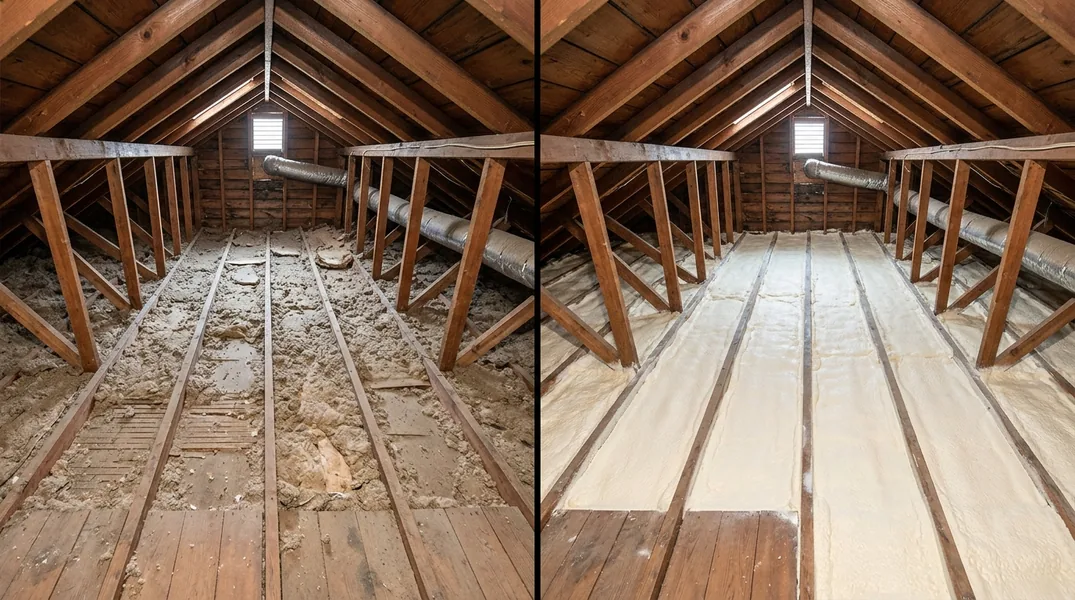
Why Rim Joists Matter in Older Minneapolis Homes
If you own an older home near Uptown or anywhere else in Minneapolis, you've probably noticed cold basements during winter. That chill isn't random. It's often coming straight through your rim joists, the wooden band that sits on top of your foundation and connects your first floor to the basement walls. In homes built decades ago, rim joists were typically left uninsulated or filled with inadequate materials that have since deteriorated.
Rim joists represent one of the biggest thermal weak points in older construction. They're exposed to both exterior temperatures and the conditioned space above, creating a direct path for cold air to infiltrate your basement and crawl spaces. Many homeowners in Minneapolis don't realize that sealing and insulating this single area can dramatically improve comfort and lower heating costs. The Minnesota winter doesn't forgive poor rim joist insulation, and the problem compounds year after year as original materials break down.
Spray Foam vs. Blown-In Insulation: Which Wins for Rim Joists
When it comes to addressing cold basements, homeowners often face a critical choice: spray foam vs. blown-in insulation. Both materials have their place, but for rim joists specifically, the comparison becomes more nuanced. Blown-in insulation, typically made from cellulose or fiberglass, is poured or blown into cavities and relies on gravity and settling to fill gaps. While it's less expensive upfront, blown-in materials struggle in rim joist applications because these areas have irregular shapes, multiple angles, and hard-to-reach corners that loose-fill insulation simply cannot seal effectively.
Closed Cell Spray Foam Insulation expands as it cures, conforming perfectly to every nook and cranny of your rim joist assembly. It creates an air-tight seal that blown-in insulation cannot match, stopping infiltration at the source. Additionally, closed-cell foam provides structural reinforcement to the rim joist itself, which is a bonus you won't get from cellulose or fiberglass. The R-value per inch is also significantly higher with spray foam, meaning you need less material thickness to achieve superior performance. For older homes where space is already tight, this efficiency matters.
Spray Foam vs. Fiberglass: The Durability Factor
Fiberglass batts, a traditional choice in many older Minneapolis homes, degrade over time, especially in basements where moisture is common. Fiberglass absorbs water, loses its insulating properties when wet, and provides no air sealing whatsoever. Rim joists in basements are prime moisture zones, making fiberglass a poor long-term investment. Homeowners often discover that their fiberglass insulation has compressed, shifted, or become moldy after 20 or 30 years, leaving their basements just as cold as before.
Spray foam, by contrast, is hydrophobic and resistant to moisture damage. It doesn't absorb water, doesn't support mold growth, and maintains its R-value indefinitely. Once applied, spray foam insulation doesn't settle, compress, or require replacement. The upfront cost is higher than fiberglass, but the lifespan and performance justify the investment for homeowners serious about solving basement cold spots permanently. If you're tired of temporary fixes, spray foam delivers lasting results that fiberglass simply cannot match.
Spray Foam vs. Cellulose: Why Air Sealing Matters Most
Cellulose is often marketed as an eco-friendly blown-in insulation option, and while it does have recycled content, it shares the same fundamental weakness as fiberglass when applied to rim joists. Cellulose is also susceptible to moisture, settling, and air leakage. In rim joist applications, the goal isn't just to add R-value but to eliminate air infiltration. A rim joist that's not sealed is like insulating a room with an open window. Heat loss occurs through convection and air movement, not just conduction through the material itself.
This is where spray foam's superiority becomes undeniable. The foam expands to fill every void, sealing air leaks while simultaneously providing insulation. Cellulose and other blown-in materials leave gaps, especially around pipes, electrical penetrations, and irregular framing. Those gaps are exactly where cold air sneaks in during a Minneapolis winter. If you want to truly eliminate basement cold, you need both insulation and air sealing. Spray foam delivers both in one application.
Best Insulation for Attic and Basement: A Comprehensive Approach
While this article focuses on rim joists, it's worth noting that Attic Spray Foam Insulation follows the same logic. The best insulation for attic spaces is one that seals air leaks while providing high R-value. Many homeowners address their attics first, but rim joists are equally important for overall home performance. In fact, a poorly insulated rim joist can undermine all the work you do in your attic. Cold air rising from the basement through wall cavities can negate attic improvements. A comprehensive insulation strategy addresses both areas using the right material for each application.
For rim joists and basement rim band areas, Closed Cell Spray Foam Insulation is the gold standard. For attics, Open Cell Spray Foam Insulation is often preferred because it's slightly less expensive and provides excellent air sealing with good R-value. The point is that different areas of your home may benefit from different types of spray foam, and a professional assessment ensures you're making the right choice for your specific situation.
Rim Joist Foam Insulation Cost in Minneapolis: What to Budget
Rim joist insulation pricing varies based on the linear footage of rim joist you need to cover, the type of spray foam selected, and the complexity of access. A typical rim joist project for a 1,500 to 2,000 square foot home might involve 150 to 200 linear feet of rim band, depending on your home's footprint. Closed-cell spray foam typically costs more per board foot than blown-in alternatives, but the performance difference justifies the expense. Most homeowners find that the energy savings over five to ten years begin to offset the initial investment.
Rather than guessing at pricing, the best approach is to request a free estimate from Minneapolis Spray Foam Insulation. A professional can assess your rim joist condition, measure the area accurately, and provide a detailed quote tailored to your home. You might also qualify for energy efficiency rebates or tax credits at the federal or state level, which can reduce your net cost. Call (612) 441-5734 to schedule an evaluation and get a clear picture of what rim joist foam insulation will cost for your specific property.
When to Call a Professional for Rim Joist Foam Near Me
Rim joist insulation isn't a DIY project. Spray foam application requires specialized equipment, proper safety training, and knowledge of building codes and moisture management. Improper application can trap moisture, create structural issues, or result in inadequate air sealing. Professional installers have the experience to handle foundation variations, identify existing problems, and apply foam at the correct thickness and density. They also know how to work around plumbing, electrical, and HVAC systems without creating hazards.
If you're experiencing cold basements, noticing ice dams on your roof, or seeing energy bills spike during winter, rim joist insulation is worth investigating. Minneapolis Spray Foam Insulation serves the Minneapolis area with experienced technicians who understand the unique challenges of older homes. Contact us today at (612) 441-5734 or visit our website to request a free estimate. We'll inspect your rim joists, explain your options, and help you decide whether spray foam is the right solution for your home.
Looking for a professional spray foam insulation contractor in Minneapolis? Minneapolis Spray Foam Insulation responds fast for all your spray foam insulation needs.
Get a Free Quote